Something's wrong with your septic — here's how to figure out what
A failing septic system can mean something cheap and simple, or something that needs excavation. Most of the time you can tell which direction you're headed before anyone digs. We'll walk through the likely causes in order, starting with the least expensive, so you know what you're actually dealing with.
- National Ground Water Association
- Colorado Water Well Contractors Association
- Bonded & insured
- Free estimates and project quotes
What you're noticing
Signs your septic system is telling you something
Most septic problems announce themselves the same three or four ways. What you're seeing outside usually points to where the problem is inside the system.
What we handle
Septic work inside our scope
We work the septic system from the point where the line leaves the building to the end of the leach field. Everything in between is ours.
-
Septic inspection and service
A routine inspection checks tank condition, inlet and outlet baffles, the distribution box, and leach field surface. Catching a baffle problem or a slow field early is almost always cheaper than waiting until the system backs up. We also coordinate pumping with a licensed pumper and document what we find.
-
Septic tank installation
When a tank is cracked, collapsed, or simply too small for how the property is used now, we handle the full installation — excavation, tank placement, inlet and outlet connections, and backfill. We work with concrete and poly tanks depending on site conditions and county requirements.
-
Septic line replacement
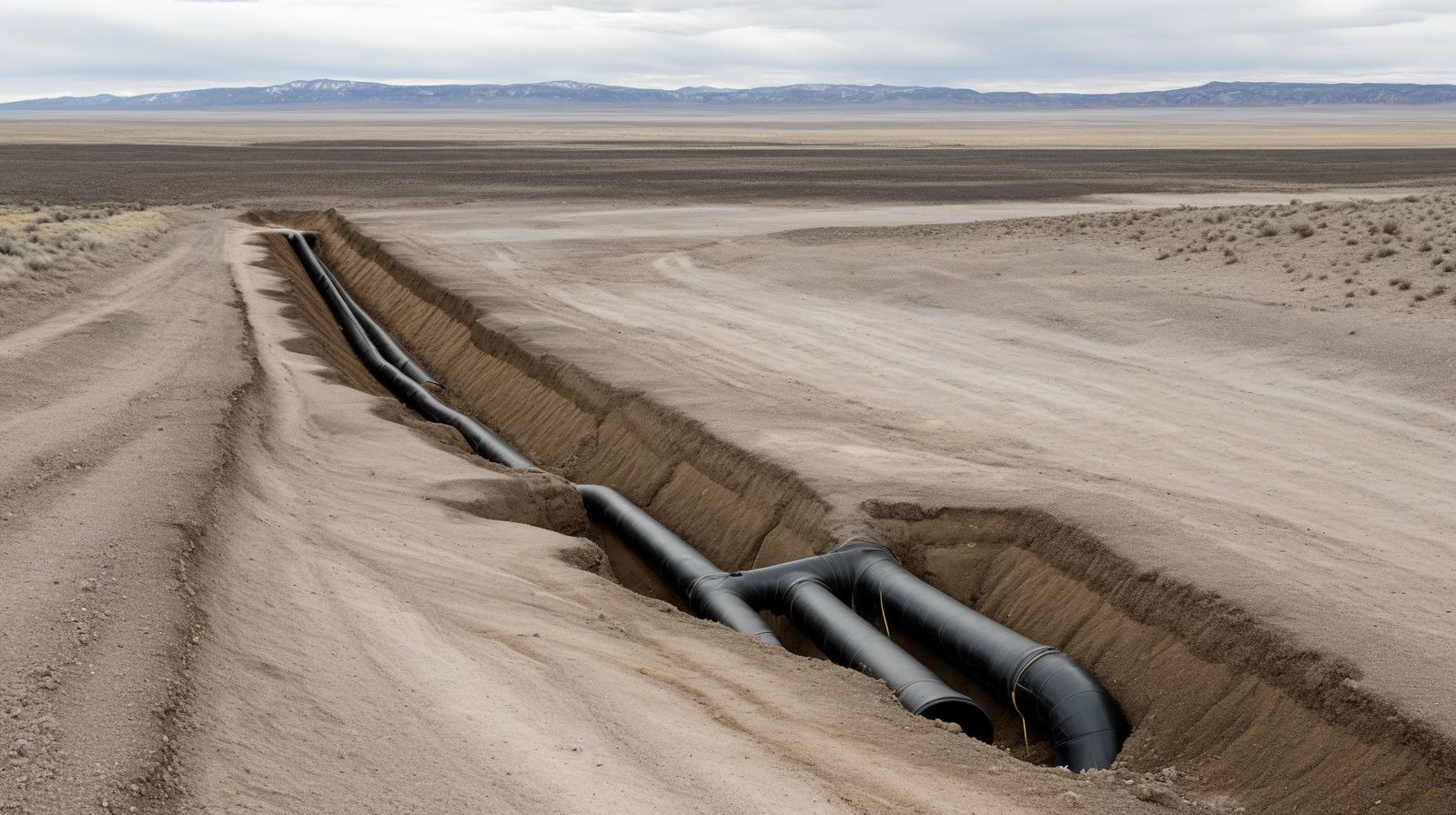
The line from your house to the tank takes a lot of abuse from ground movement, root intrusion, and age. A cracked or bellied line holds effluent instead of moving it, which backs up fast. We locate the problem section, excavate, replace the line, and restore grade.
-
Leach field repair
A saturated or failing leach field is the most involved septic repair, but not every wet field needs full replacement. We assess whether the field can be rested, whether a distribution problem is starving part of the field, or whether excavation and replacement is the right call.
-
Distribution box inspection and repair
The distribution box (the concrete or plastic box that splits flow evenly between leach field trenches) cracks, shifts, and fills with solids. An uneven split means one trench gets overloaded while others sit dry. Fixing or replacing the d-box is often one of the cheaper ways to extend a field's life.
-
Excavation for septic work
We run our own excavation equipment, so we're not waiting on a subcontractor to expose a tank lid or open a trench. That keeps the job moving and means one crew manages the whole process from first dig to final grade.
We work from where the septic line exits the building envelope to the end of the leach field — interior drains, fixtures, and water heaters are outside our scope and belong with an interior plumber.
Cheapest cause first
How we work through a septic problem
We start with what costs least to check and rule out before moving to what costs more. This is the order we actually use in the field.
-
Check when the tank was last pumped
A tank that's never been pumped, or hasn't been pumped in many years, causes most of the symptoms above. Pumping is the least expensive thing on this list by a wide margin. If the tank is overdue, we coordinate that before anything else and see whether the symptoms resolve.
-
Inspect the inlet and outlet baffles
Baffles are the T-shaped fittings inside the tank that keep solids from flowing into the leach field. They rot out, especially older concrete tanks with steel rebar baffles. Replacing a baffle is straightforward and costs a fraction of what field work runs.
-
Check the distribution box and lines to the field
A cracked or shifted distribution box throws the flow off balance and starves part of the leach field. The septic line itself may also be cracked or bellied. Both are more involved than baffles but still far less expensive than field replacement.
-
Camera or probe the septic line
If the line from the house to the tank is suspect — slow flow, gurgling, or a wet spot along its path — we can inspect it directly. A cracked or root-invaded line is a targeted repair: excavate the bad section, replace it, done.
-
Assess the leach field
If everything upstream checks out and the field is still surfacing or backing up, we look at the field itself. Sometimes resting it and fixing the distribution helps. Full replacement is the most expensive outcome and we won't recommend it until the cheaper causes are genuinely ruled out.
-
Permit and county coordination if replacement is needed
New tanks and leach field replacements typically require a county permit and a perc test or soil evaluation. We handle the coordination so you're not managing two conversations at once. Requirements vary across the seven counties we serve, and we know what each one expects.
Free estimates on all septic work — call (719) 859-1148 and we'll talk through what you're seeing.
- Free estimates — we quote after we diagnose
- One year on labor and materials
- Colorado License #1447
Why the cheap answer is safe to give
We can afford to tell you it is the cheap part
Not because we are nicer than the next outfit. Because of how this business is built — and all three of these are checkable.
-
No rig to keep busy
A drilling rig is the most expensive thing a water contractor can own, and it has to stay working to pay for itself. We do not own one. A new well is not on our list of answers, because we could not drill it if we wanted to.
-
We are a dealer, not a manufacturer
Authorized dealer — that is where the five-year equipment warranty comes from. We do not build pumps and we do not carry a quota on them. A pump we talk you out of costs us nothing.
-
A wrong diagnosis comes back to us
One year on labor and materials means we are the ones who drive back out if the fix does not hold. Guessing expensive is not only dishonest here — it is expensive for us.
None of that is a claim about our character. You do not have to take our word for any of it — the license, the association memberships and the warranty terms are all verifiable, and they are the same on paper as they are on this page.
Questions we get asked
Before you call
The smell is the clearest tell — a wet spot from a septic problem will have a sewage or sulfur odor; a water line leak usually won't. Location matters too: septic leaks appear near the tank or over the leach field, water line leaks follow the path from your wellhead or pressure tank to the house. Our page on a wet spot in the yard walks through how to sort this out before anyone comes on site.
Pumping itself is done by a licensed septic pumper, not us — it's specialized equipment and a separate license. What we do is coordinate with a pumper, be present during the pump-out so we can inspect the baffles and tank condition at the same time, and handle anything we find that needs repair. You get one call instead of two.
When the slowdown is isolated to one fixture or one room, the clog is almost certainly inside the house, not in the septic system. That's interior plumbing work, which is outside what we do. A plumber who handles interior drain lines is the right call for that situation.
The common guideline is every three to five years, but the real answer depends on tank size, household size, and what goes down the drains. A tank that's been pumped on schedule with no additives and no grease loading can go longer. One that's never been pumped in fifteen years may already be causing field damage. If you don't know when it was last done, assume it needs it.
Full replacement is the most expensive outcome and often not the first answer. A saturated field sometimes recovers if the underlying cause — a broken baffle pushing solids into the field, an overloaded distribution box, or a tank that was never pumped — is fixed and the field is rested. We won't recommend replacement until those cheaper options are genuinely off the table.
Yes. New installations and leach field replacements require county permits, and in most cases a soil evaluation. Requirements differ across the seven counties we work in. We coordinate that process so you're not managing the paperwork separately from the job.
Labor and materials carry a one-year warranty. Equipment installed through us as an authorized dealer carries a five-year equipment warranty. We'll tell you which applies to your specific job before we start.
Yes — we cover seven counties in southern Colorado, up to 75 miles from Weston. If you're not sure whether your property is in range, call us at (719) 859-1148 and we'll tell you straight.
If your situation isn't covered above, call (719) 859-1148 — we answer 24 hours Monday through Saturday and can usually tell you what you're dealing with before anyone drives out. Call (719) 859-1148
Before we arrive
A few things that help us move faster on site
You don't need to have answers to all of these, but anything you know saves time when we get there.
- Tank location and last pump date. If you have a as-built drawing, a permit from when the system was installed, or any record of the last pump-out, have it handy — it tells us a lot about what we're walking into.
- How long the symptoms have been present. Whether this came on suddenly or has been building over months changes where we look first. A sudden backup points somewhere different than a slow decline over a season.
- Which drains or fixtures are affected. All drains slow at once usually means something downstream of the house. One drain or one bathroom may mean an interior issue that's outside our scope — good to sort that out on the phone before we make the trip.
- Access to the yard over the tank and field. If the tank lid area or the leach field is fenced, gated, or blocked by stored equipment, clearing that before we arrive keeps the job from losing half a morning to logistics.
If you're not sure about any of this, don't worry — we'll work through it with you on the call.
Tell us what the water is doing.
We’ll tell you what it usually turns out to be, what it will take to confirm it, and what it costs — before we touch anything.
Call (719) 859-1148Answering 24 hours a day, Monday through Saturday
- Colorado License #1447 · bonded and insured
- One year on labor and materials, five on equipment
- Free estimates and project quotes — we quote after we diagnose
- NGWA and Colorado Water Well Contractors Association
Or have us call you back
If you are on bad signal or would rather not talk right now.