Running out of water — or trying not to?
If your well can't keep up with demand, or you need storage to bridge a dry stretch, a cistern is usually the practical fix. This page covers what we do: installation, cleaning, pump setup, and building storage around a low-yield well. We serve seven counties, 75 miles out from Weston.
- National Ground Water Association
- Colorado Water Well Contractors Association
- Bonded & insured
- Free estimates and project quotes
What's going wrong
The signs that your storage situation needs attention
Most storage problems show up as one of a few familiar symptoms. Here's what each one usually points to.
What we do
Cistern and storage work we handle
Everything from a new installation to cleaning an existing tank to building a full storage system around a well that can't keep up.
-
Cistern installation
We size, place, and connect new storage tanks — above-ground or buried — to your water supply and distribution system. That includes the inlet, outlet, overflow, and any controls needed to fill and draw from the tank properly. See the full detail on our cistern installation page.
-
Cistern cleaning and disinfection
A tank that hasn't been cleaned in a few years can harbor sediment, biofilm, or bacterial growth that affects taste and safety. We pump it down, scrub it out, disinfect it, and get it back in service. It's the first thing to rule out before replacing any other component.
-
Cistern pump and pressure setup
A cistern needs its own pump and pressure system to move water from storage into your distribution lines at usable pressure. We install, replace, and service that equipment — pump, pressure tank, controls, and wiring — as a complete system.
-
Storage for a low-yield well
Some wells produce enough water over the course of a day, just not fast enough to meet peak demand. A storage system captures that slow trickle and holds it so you have what you need when you need it. We design and build that kind of setup around what your well actually produces.
-
Storage tank interconnection and expansion
If you already have one tank and need more capacity, we can add tanks and connect them into a single system. That means getting the piping, valves, and controls right so tanks fill and draw evenly without creating air pockets or pressure problems.
-
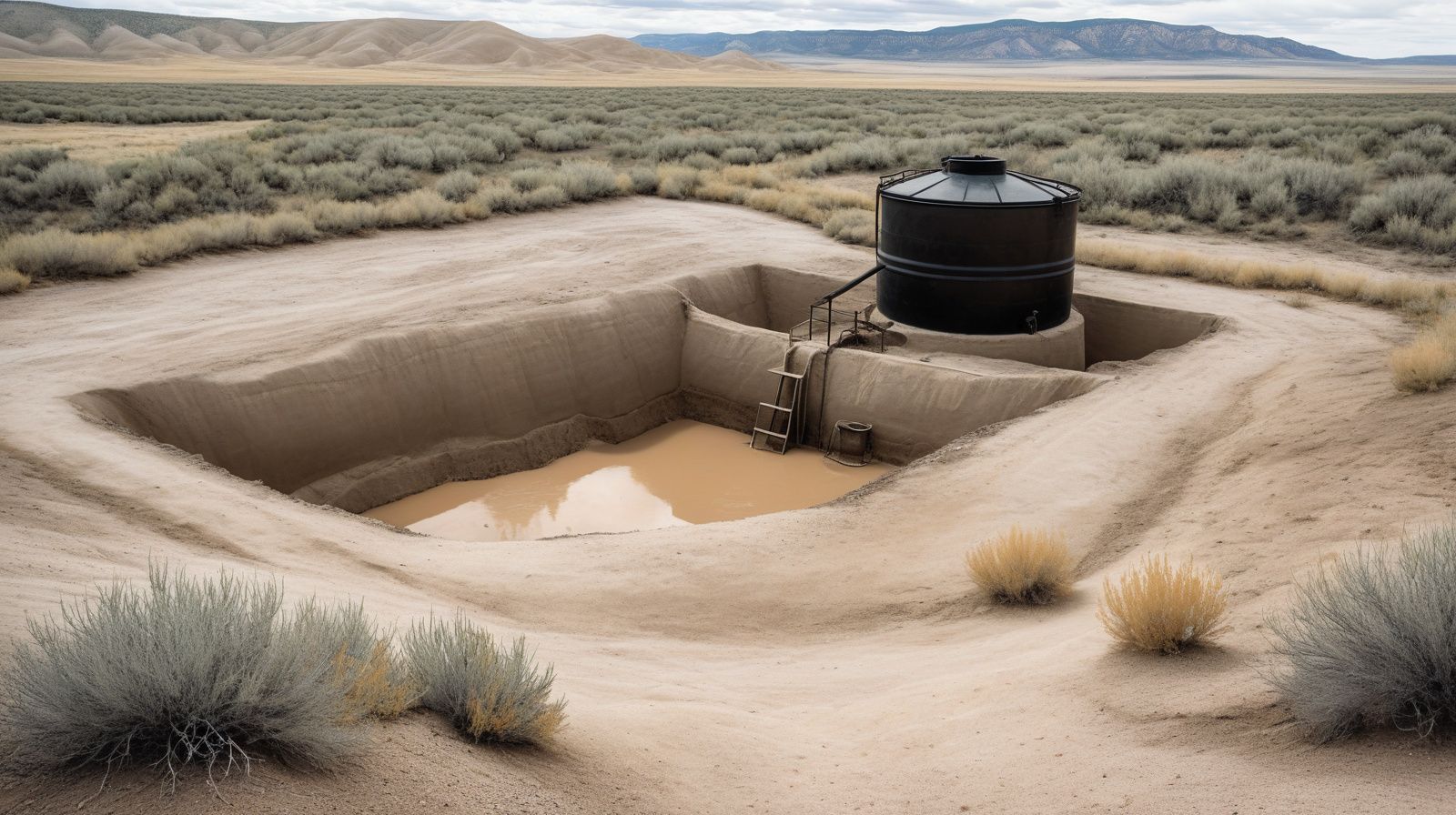
Excavation for buried cisterns
Buried tanks require excavation done to the right depth and bedding so the tank doesn't shift or collapse. We handle the dig as part of the installation — we have the equipment and we do it ourselves, so nothing falls between two contractors.
We work supply-side only — from your well or delivery point to the point where water enters the building; interior plumbing, fixtures, water heaters, and drains are outside what we do.
Cheapest first
How we work through a storage problem before recommending anything expensive
We look at the low-cost causes before we talk about new equipment. Here's the sequence.
-
Check and clean the existing tank
Sediment and biofilm buildup can make a functioning cistern behave like a failing one — bad pressure, slow fill, contamination. Cleaning and disinfection is the least expensive thing we do and the first thing we check. If that fixes it, nothing else needs to happen.
-
Inspect the pump and pressure controls
A worn pump, a waterlogged pressure tank, or a failed pressure switch on the cistern side can cause symptoms that look like a storage problem when they're actually a pressure equipment problem. Replacing a switch or re-pressurizing a tank costs a fraction of replacing the cistern pump itself.
-
Replace the cistern pump
If the pump feeding your distribution system from the cistern is worn out, pressure will drop under load even when the tank is full. A pump replacement is more involved than a controls fix but still well below the cost of new storage infrastructure.
-
Evaluate storage volume against actual usage
Sometimes the system is working correctly — there just isn't enough tank capacity for how much water the property uses. We can usually tell this from how fast the tank drops versus how fast the well or delivery fills it. Knowing the number tells you whether you need more storage or a tighter delivery schedule.
-
Add storage capacity
If volume is genuinely short, adding a tank or replacing an undersized one is the fix. It's a bigger job — excavation, new tank, piping, and controls — but it solves a problem that nothing else will. We'll size it to what your well produces and what your household actually uses.
-
Build a complete low-yield storage system
When a well produces slowly but reliably, a properly designed storage and pump system means you never notice the low yield day to day. This is the most involved setup we build, and it's the right answer when the well itself is fine but demand keeps outrunning recovery. We don't drill wells — if the well is the actual problem, we'll say so and point you to someone who does.
When you're ready to talk it through, call (719) 859-1148 — free estimates, no pressure.
- Free estimates — we quote after we diagnose
- One year on labor and materials
- Colorado License #1447

Why the cheap answer is safe to give
We can afford to tell you it is the cheap part
Not because we are nicer than the next outfit. Because of how this business is built — and all three of these are checkable.
-
No rig to keep busy
A drilling rig is the most expensive thing a water contractor can own, and it has to stay working to pay for itself. We do not own one. A new well is not on our list of answers, because we could not drill it if we wanted to.
-
We are a dealer, not a manufacturer
Authorized dealer — that is where the five-year equipment warranty comes from. We do not build pumps and we do not carry a quota on them. A pump we talk you out of costs us nothing.
-
A wrong diagnosis comes back to us
One year on labor and materials means we are the ones who drive back out if the fix does not hold. Guessing expensive is not only dishonest here — it is expensive for us.
None of that is a claim about our character. You do not have to take our word for any of it — the license, the association memberships and the warranty terms are all verifiable, and they are the same on paper as they are on this page.
Questions we get asked
Before you call
If the tank is full but you have no pressure, the pump or pressure setup is the issue. If you have good pressure until the tank empties faster than it fills, the problem is either storage volume or well yield. We can usually sort this out over the phone before we even drive out.
Every three to five years is a reasonable baseline, but it depends on your water source and how the tank is sealed. Tanks fed by hauled water or surface-influenced wells tend to accumulate sediment faster. If you've never had yours cleaned, it's worth doing before assuming anything else is wrong.
Yes. We connect additional tanks into your existing system with the right piping and valves so they work as a single storage volume. The main things we need to know are where the existing tank sits and how much space you have to work with.
Usually yes. If your well produces enough over the course of a day but can't keep up with peak demand, a storage system captures that slow trickle and holds it. You draw from the cistern at normal household rates while the well refills it slowly in the background. There's a full page on building storage around a low-yield well if you want the detail.
No — we don't have a drill rig and we don't drill wells. That's actually why our advice on whether you need a new well or better storage is straightforward: we have no financial reason to push you toward drilling. If we think drilling is the right answer, we'll say so and refer you to someone who does it.
A pressure tank (the vessel that looks like a propane tank, usually inside or near your pump house) holds a small amount of water under pressure — enough to smooth out pump cycling, not enough to be a real reserve. A cistern is large-volume storage, typically hundreds to thousands of gallons, that acts as a buffer between your water source and your daily use. They serve different purposes and often both exist in the same system.
We deliver water and we service the storage systems that receive it. If you're on hauled water, we can make sure your cistern is sized, sealed, and set up correctly so delivery days go smoothly and you're not running short between trucks.
Our labor and materials carry a one-year warranty. Equipment we install as an authorized dealer carries a five-year warranty. If something goes wrong with the work in that window, we come back and make it right.
If your situation doesn't fit neatly into any of these, call (719) 859-1148 — the line is answered 24 hours Monday through Saturday and we're straightforward about what we can and can't help with. Call (719) 859-1148
Before we arrive
A few things that help us move faster
You don't need to have all of this, but anything you can tell us saves time on site.
- Tank size and age. If you know the gallon capacity or have any paperwork from when the cistern was installed, that helps us understand what we're working with before we show up.
- Where your water comes from. Well, hauled delivery, or both — and roughly how often you take delivery if that applies. It affects how we size and configure any storage work.
- How the pressure problem behaves. Does it happen at a specific time of day, after a certain number of fixtures run, or randomly? A pattern narrows the diagnosis considerably.
- Access to the tank. If the cistern is buried, knowing roughly where the lid is saves digging around. If it's above-ground, make sure the area around it is clear enough for us to work.
If you don't have any of this, that's fine — we'll work through it together when we get there.
Tell us what the water is doing.
We’ll tell you what it usually turns out to be, what it will take to confirm it, and what it costs — before we touch anything.
Call (719) 859-1148Answering 24 hours a day, Monday through Saturday
- Colorado License #1447 · bonded and insured
- One year on labor and materials, five on equipment
- Free estimates and project quotes — we quote after we diagnose
- NGWA and Colorado Water Well Contractors Association
Or have us call you back
If you are on bad signal or would rather not talk right now.