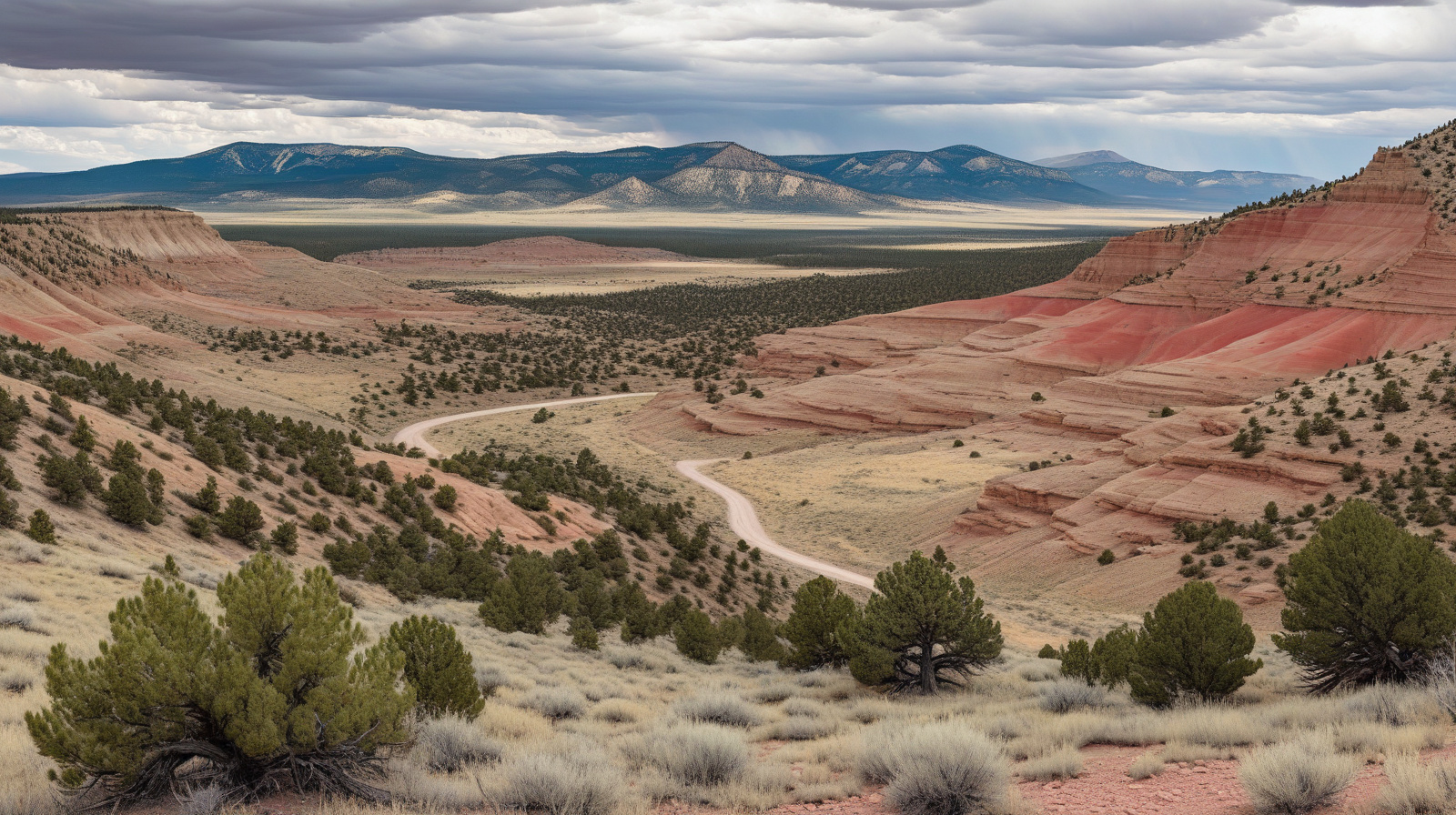
What the Arkansas Basin's water rules mean for your well
If your property sits in Las Animas, Huerfano, Pueblo, or Custer County, your well falls under Division 2 — the Arkansas River drainage. The rules here are different from the San Luis Valley side of the divide, and the difference matters before you drill, permit, or change how you use the water. This page explains what's stable and points you at the Colorado Division of Water Resources for anything that changes.
- National Ground Water Association
- Colorado Water Well Contractors Association
- Bonded & insured
- Free estimates and project quotes
Where the confusion starts
Most property owners don't know which water division they're in — until a permit gets complicated
Colorado divides water authority by drainage basin. The line running through Water Works Plus's service area puts some counties under Division 2 rules and others under Division 3 — same truck, same week, two different regulatory regimes.
What this page covers
The framework that governs wells in Division 2
These are the rules that are stable and widely documented. Fees, form numbers, and processing times change — for those, the Division of Water Resources is the only reliable source.
-
Division 2 — Arkansas River drainage
Las Animas, Huerfano, Pueblo, and Custer counties sit in Colorado Water Division 2, administered by the Division 2 engineer under the Arkansas River Compact between Colorado and Kansas. Your well permit, your water rights, and any augmentation question all run through Division 2.
-
Exempt wells and what makes one
An exempt well is one the State Engineer can permit without a finding that it won't injure senior water rights. Exempt wells are capped at 15 gallons per minute and must discharge to a non-evaporative wastewater system — a septic tank and leach field, not a dry well or surface discharge.
-
Household-use-only permits (under 35 acres)
On a parcel smaller than 35 acres, the standard exempt permit allows water inside the home only — not for lawns, gardens, windbreaks, livestock, or any outside use. This limit comes from C.R.S. 37-92-602 and applies to wells drilled on or after May 8, 1972.
-
Domestic and livestock permits (35 acres or more)
On a tract of 35 acres or more, the only well on the property may be permitted for household use in up to three dwellings, irrigation of not more than one acre of home garden and lawn, and watering of domestic animals and livestock. The 15 gpm cap still applies.
-
Non-exempt wells in Division 2
A well that exceeds those limits — most irrigation wells and commercial wells — is non-exempt. Non-exempt wells require a decreed plan for augmentation or a substitute water supply plan that replaces the depletions the well causes. There is no subdistrict fee mechanism in Division 2 equivalent to the San Luis Valley's; augmentation here follows a different path.
-
Septic and OWTS — county jurisdiction
On-site wastewater systems are governed by CDPHE Regulation 43 as the statewide floor, but permits are issued and inspections are done by the county. Las Animas, Huerfano, Pueblo, and Custer counties each set their own requirements, which may be stricter than the state minimum. Confirm what applies to your parcel with your county health department before any work begins.
Water Works Plus services the supply side of your system — well to the building envelope — and does not drill wells, does not issue permits, and does not practice water law.
How to work through a permit or use question
Start with what you know about your parcel, then confirm with the authority
Most property owners can answer the first two questions themselves. The rest belong to the Division of Water Resources.
-
Find your parcel size
The 35-acre threshold is the first dividing line. Your county assessor's records or your deed will give you the acreage. This one number narrows which permit type applies to you before you make a single call.
-
Pull your well permit
The Colorado Division of Water Resources maintains a well permit search at dwr.colorado.gov. Your permit lists the allowed uses, the maximum pumping rate, and any conditions attached to the well. If the property changed hands without the permit being transferred or updated, that's worth resolving.
-
Compare your current use to the permitted use
If you're using the well only the way the permit describes, you're in straightforward territory. If you've added a dwelling, started watering livestock, or expanded irrigation since the original permit was issued, contact the Division of Water Resources to find out whether the use is still within bounds.
-
Confirm septic permit status with the county
An exempt well requires a non-evaporative wastewater system. If the septic system is old, unpermitted, or you're adding capacity, the county health department — not the state — is the authority. Each county's requirements vary, and the county is the one that inspects and permits the work.
-
Get the system itself assessed
Regulatory compliance and mechanical condition are two separate things. A well that's permitted correctly can still have a failing pump, a waterlogged pressure tank, or a deteriorating casing. That's where Water Works Plus comes in — evaluating and servicing what's already in the ground.
-
Contact DWR before any change in use or new construction
Adding a structure, changing irrigated acreage, or increasing pumping rate can each affect permit status. Division 2 processes these through the State Engineer's office. Contact them first — changing the physical system before the paperwork is sorted creates problems that are harder to fix later.
Water Works Plus services wells and water systems across seven counties in the Arkansas Basin; free estimates, Colorado license #1447.
- Free estimates — we quote after we diagnose
- One year on labor and materials
- Colorado License #1447
Why the cheap answer is safe to give
We can afford to tell you it is the cheap part
Not because we are nicer than the next outfit. Because of how this business is built — and all three of these are checkable.
-
No rig to keep busy
A drilling rig is the most expensive thing a water contractor can own, and it has to stay working to pay for itself. We do not own one. A new well is not on our list of answers, because we could not drill it if we wanted to.
-
We are a dealer, not a manufacturer
Authorized dealer — that is where the five-year equipment warranty comes from. We do not build pumps and we do not carry a quota on them. A pump we talk you out of costs us nothing.
-
A wrong diagnosis comes back to us
One year on labor and materials means we are the ones who drive back out if the fix does not hold. Guessing expensive is not only dishonest here — it is expensive for us.
None of that is a claim about our character. You do not have to take our word for any of it — the license, the association memberships and the warranty terms are all verifiable, and they are the same on paper as they are on this page.
Questions we get asked
Before you call
Repair work on an existing permitted well — replacing a pump, pulling the casing to inspect it, servicing the pressure tank — generally doesn't require a new permit. But any physical change to the well itself, like deepening it or redrilling, can trigger a new permit requirement. The Division of Water Resources is the place to ask before any work that changes the well structure.
Not under a standard household-use-only permit. That permit allows water inside the home only — not lawns, gardens, windbreaks, or livestock. If outside use matters to you, the parcel size and the number of wells on the property determine what options exist. Confirm with the Division of Water Resources what permit type, if any, would cover the use you want.
Both divisions use the same statewide exempt-well framework — the 15 gpm cap, the 35-acre threshold, the household and livestock use categories. The material difference for non-exempt wells is that Division 3 (the Rio Grande Basin) has a subdistrict fee structure tied to aquifer recovery targets, which Division 2 doesn't have. For a household well that stays within exempt limits, the day-to-day rules are similar. See the companion page on Rio Grande Basin rules for the full picture.
Pull the well permit through the Division of Water Resources before closing, and confirm the permitted uses match how you intend to use the water. Check that the septic system is permitted with the county and was last inspected within a reasonable window. Water Works Plus can assess the mechanical condition of the system — pump, pressure tank, casing, water line — but permit and legal status belongs to DWR and the county. We'll tell you plainly if you need to talk to them before we touch anything.
No. We don't have a drill rig and we don't drill. That's not a limitation we apologize for — it means we have no financial reason to tell you that you need a new well. When a new well is actually the answer, we'll tell you that and refer you to a licensed driller.
Your well permit will say. Exempt wells are limited to 15 gallons per minute and must have a non-evaporative wastewater system. If your well doesn't have a permit, or the permit is unclear, the Division of Water Resources can look it up by location or parcel. We're not the authority on permit status — they are.
Your county health department, not the state — though the state's CDPHE Regulation 43 sets the minimum floor. Pueblo County and Las Animas County each issue their own permits and do their own inspections, and their requirements may be stricter than the state baseline. Call your county health department before any septic work to find out what applies to your parcel.
If your well is exempt — under 15 gpm, on a qualifying parcel, used within the permitted uses — augmentation is not required. Augmentation applies to non-exempt wells, which are mostly irrigation and commercial operations. If you're unsure whether your well qualifies as exempt, the Division of Water Resources is the right place to ask — that's a water-rights determination, not something we make.
If your question is about the condition of your pump, pressure tank, water line, or septic system rather than the permit behind it, call us at (719) 859-1148 — answered 24 hours Monday through Saturday. Call (719) 859-1148
Before you call anyone
What to have ready when you contact DWR or the county
The right information gets you a faster answer from the Division of Water Resources or your county health department — and from us, if the question is mechanical.
- Your well permit number. It's on the original permit document and is searchable at dwr.colorado.gov by location. Knowing it saves time with DWR and helps us pull up the well's history before we arrive.
- Your parcel size in acres. The 35-acre threshold is the first question any permit discussion will reach. Your deed or county assessor record will have it — you don't need a survey to find the number.
- How the water is currently being used. Inside the home only, or also outside? One dwelling or more? Livestock? Being specific saves back-and-forth with DWR and helps us understand what the system is being asked to do.
- The age and condition of the septic system, if you know it. County health departments often ask when the system was installed and last inspected. If you don't know, the county may have permit records on file — or a condition assessment from Water Works Plus can give you a starting point.
You don't need to have all of this sorted before calling us — we'll tell you what we can assess and what needs to go to the authority first.
Tell us what the water is doing.
We’ll tell you what it usually turns out to be, what it will take to confirm it, and what it costs — before we touch anything.
Call (719) 859-1148Answering 24 hours a day, Monday through Saturday
- Colorado License #1447 · bonded and insured
- One year on labor and materials, five on equipment
- Free estimates and project quotes — we quote after we diagnose
- NGWA and Colorado Water Well Contractors Association
Or have us call you back
If you are on bad signal or would rather not talk right now.